
|
|
||||
|---|---|---|---|---|
| Volume 56 Number 24, August 8, 2026 | ARCHIVE | HOME | JBCENTRE | SUBSCRIBE |
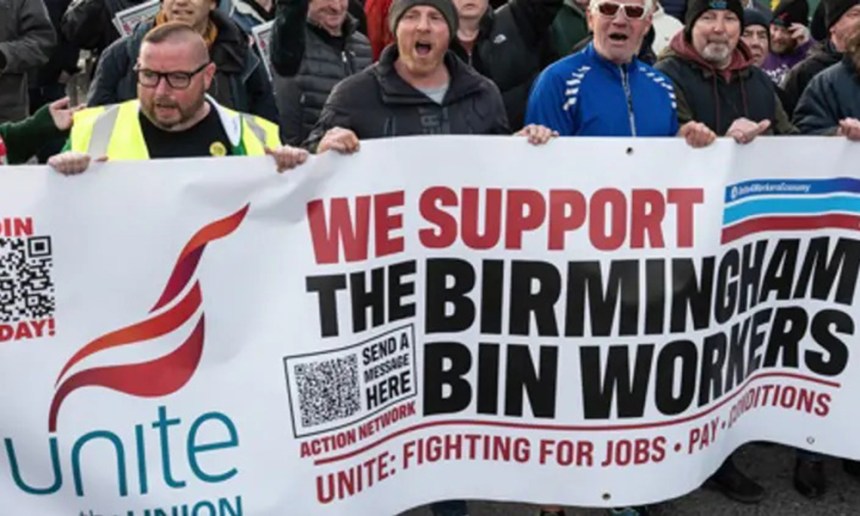
The long-running Birmingham bin workers' strike remains unresolved, despite renewed negotiations and reports that a settlement may be close. Industrial action began with one-day stoppages in January 2025 and became an all-out strike on March 11 that year. Nineteen months after the dispute began, the workers are still defending themselves against the loss of jobs, roles and pay arising from Birmingham City Council's restructuring of the waste service.
The dispute began over the abolition of the Waste Recycling and Collection Officer role. Unite has said that around 150 to 170 workers faced losses of up to £8,000 a year, while hundreds more would lose opportunities for pay progression. The council has consistently disputed those figures, while the workers have maintained that the changes amount to fire and rehire.
Following the change in political control at the May local elections, the new coalition administration declared settling the strike its first priority. Council leader Roger Harmer said in July: "We will find a deal. We will make a deal. There has to be a deal." Harris Khaliq, the independent councillor now responsible for city services, has confirmed that he instructed council officers to resume talks with Unite.
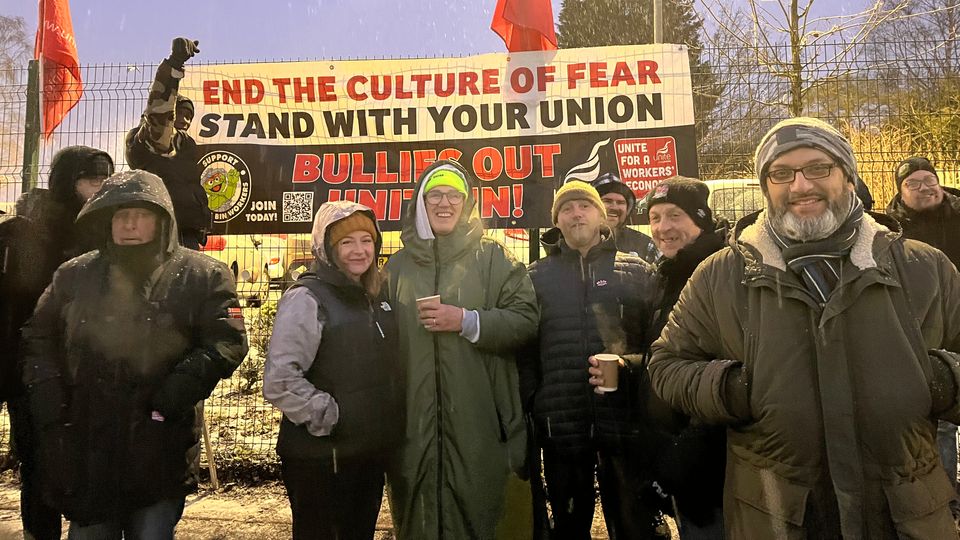
Reports at the end of July said that a proposal involving compensatory payments to affected workers was being considered and subjected to legal and financial checks. Any agreement would require the support of the council's political leadership, senior officers, and external auditors, as well as acceptance in a ballot of Unite members. Neither the council nor Unite has confirmed that such a proposal has been finalised. Importantly, it would also require approval by the imposed government-appointed commissioners who still oversee the council despite the recent election.
An earlier basis for agreement was announced in April by the previous council leader, John Cotton. Unite said that this restored the "ballpark" proposals reached through Acas, including at least two years' protection from losses arising from job evaluation, a route into permanent employment for qualifying agency workers, the ending or review of disciplinary action, protection of pension rights, and the withdrawal of legal action by both sides. The May election intervened before a final offer was put to the workers. The new administration subsequently said that no formal council agreement existed and began its own consideration of the dispute.
Meanwhile, the council is proceeding with its wider transformation of refuse collection. About 150,000 homes served by the Perry Barr depot, including parts of north Birmingham and Sutton Coldfield, are taking part in a pilot involving fortnightly general-waste and recycling collections and a weekly food-waste collection. Residents have reported missed deliveries of bins, missed collections, confusion about the timetable and concern about whether smaller general-waste bins can hold two weeks' rubbish.

In an admission that decisions imposed during the strike damaged the public service and the interests of residents, councillor Khaliq has now acknowledged that the previous administration was wrong to suspend kerbside recycling when the industrial action began. Recycling collections were withdrawn across the city for some eighteen months on the grounds that the available non-striking crews had to be concentrated on general waste. Birmingham, which already has one of the lowest recycling rates in England, is now trying to restore recycling in stages while the dispute continues. The council has not given a date for its return throughout the city.
These facts underline that the bin workers' dispute cannot be separated from the condition and direction of the public service itself. The prolonged withdrawal of recycling, the instability of collections and the difficulties encountered in the new pilot demonstrate the consequences of attempting to reorganise an essential service through cuts, imposition and strike-breaking instead of drawing on the knowledge and experience of the workers who provide it.
For more than a year, the council and the state authorities behind it relied on agency labour, court injunctions and police powers while the cost of the dispute mounted. A council report put the cost at £33.4 million by January 2026; Unite argued that even this substantially underestimated the true total. In March, the High Court fined Unite £265,000, with a further £170,000 in costs, for breaches of an injunction governing activity at waste depots. A separate injunction restricting obstruction by "persons unknown" was extended in May. None of these authoritarian measures resolved the issue that caused the strike.
The change of administration has altered the public language surrounding the dispute but has not yet produced a settlement. However, despite the council's promise to prioritise a resolution, the council has not published a detailed offer or timetable for concluding negotiations. Continued silence cannot become another means by which the voice of the workers and people of Birmingham is marginalised.
The workers have sustained their action in exceptionally difficult conditions and have forced the council to return to the question of a negotiated settlement. Any final proposal must be judged by the workers themselves. It must protect them against the loss of their livelihoods and provide the conditions for a stable, properly staffed waste and recycling service.
At issue throughout has been who is to bear the consequences of the crisis and who decides the future of this essential social programme. The immediate requirement is for the council to complete negotiations and place a satisfactory offer before the bin workers without further delay. A resolution in favour of the rights of the refuse workers would serve the whole city by allowing the waste and recycling service to be rebuilt on the basis of adequate investment, secure employment and the workers' own experience. The voice of the bin workers must prevail in determining that settlement.
(Sources: News agencies, National Shop Stewards Network, Birmingham City Council, Unite the Union, previous Workers' Weekly coverage.)