
|
|
||||
|---|---|---|---|---|
| Volume 56 Number 33, November 7, 2026 | ARCHIVE | HOME | JBCENTRE | SUBSCRIBE |
Workers' Weekly Internet Edition: Article Index :
Discussion on Budget:
Whose Wealth, Whose Security, Who Decides?US Mid-Term Election Results:
The Peoples of the US, Especially the Youth, Speak Out Loud and Clear: NO Means NO!Coming Events:
Weekend of anti-war action November 20 & 21
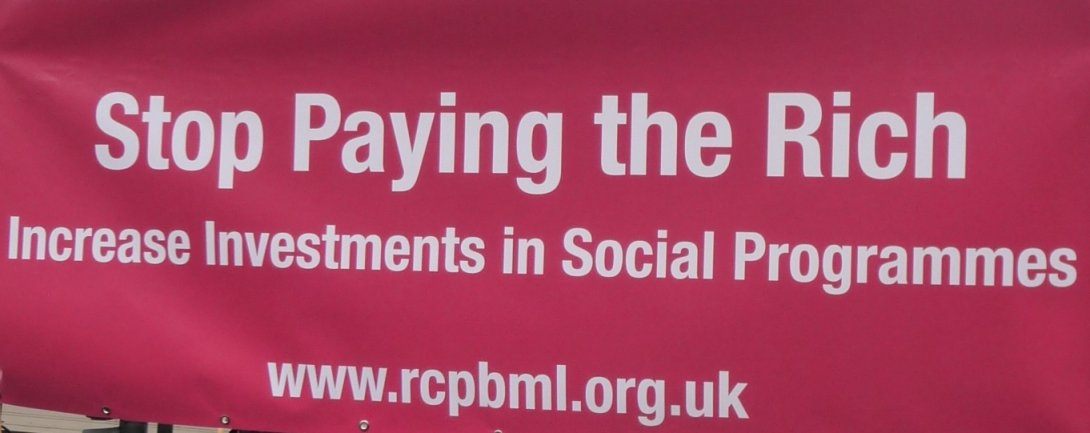
Workers' Weekly recently examined how the autumn Budget directs social product towards private interests and military production while preparing further restraints on social programmes. [1]
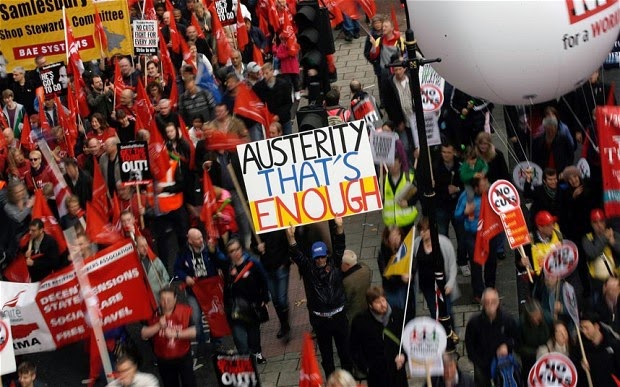
"Fiscal discipline underwrites every promise this government makes," declares the Budget. It presents falling government borrowing as the basis for economic stability and security. The Budget forecasts an average of £14 billion a year in additional government debt interest compared with the March forecast. It uses part of its fiscal buffer to accommodate this increase while requiring other commitments to fit its rules. The claims of creditors are treated as obligations; the requirements of society must accommodate them. [2]
The issue concerns the relations through which wealth is produced and appropriated. Workers produce the goods and services which sustain society. Their work puts materials, machinery, infrastructure and accumulated knowledge to use, transferring previously produced value into new products and creating new value. Production is a social process involving millions of people. Private ownership gives a small section of society the power to appropriate its results and decide their use. Instead, the producers of social wealth must become the authority which sets the economy's direction.
Household insecurity behind the fiscal promises
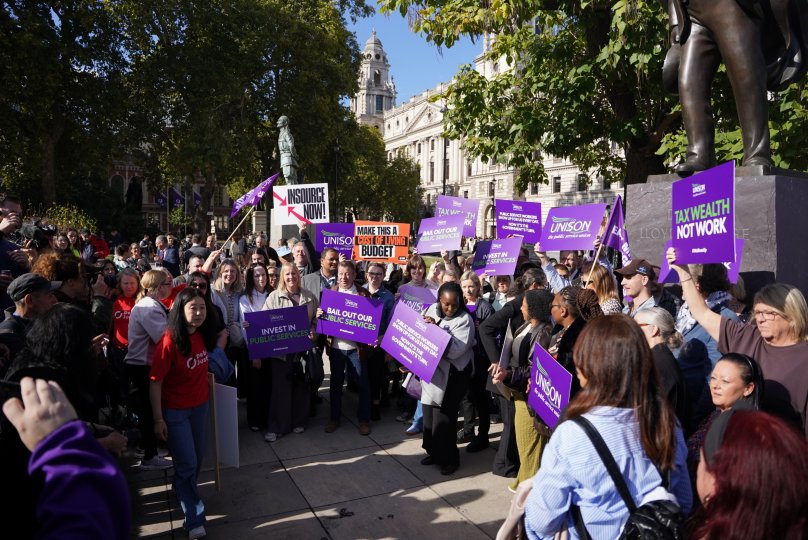
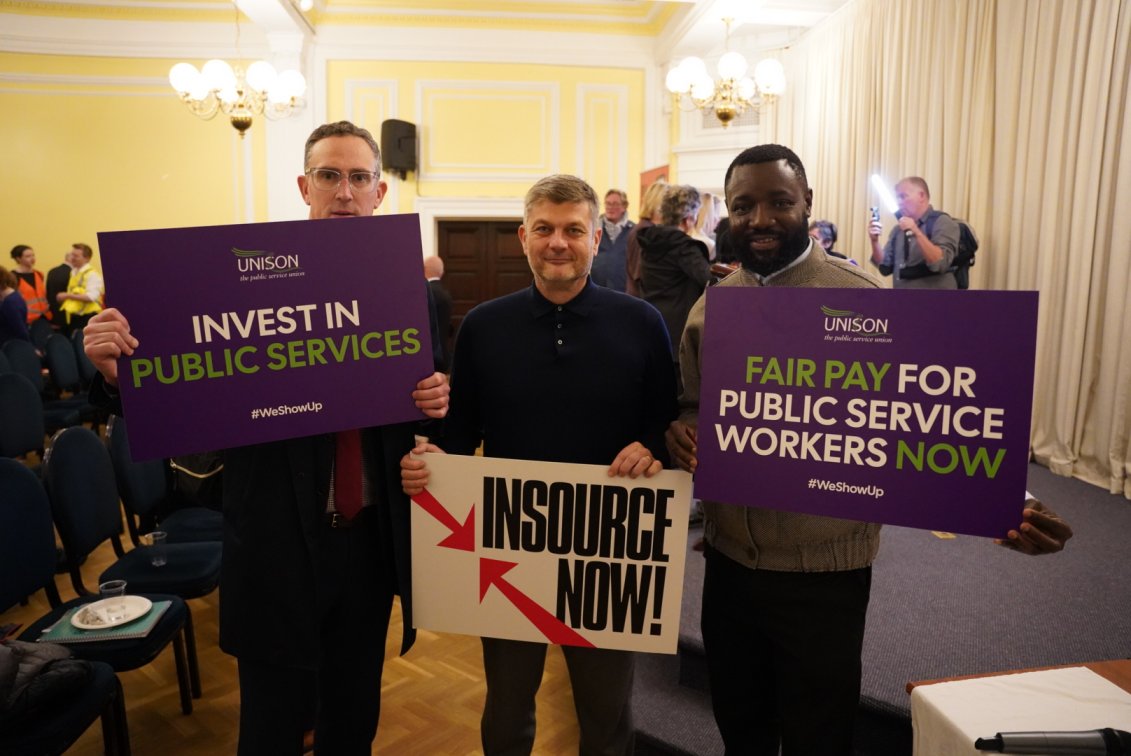
Cost of living pre-budget lobby on Parliament, October 13
2026
Richard Murphy's discussion of the Budget forecasts helps to expose the insecurity behind the government's promises. Government borrowing is projected to fall, he points out, while households save less, face higher mortgage costs and move collectively into net borrowing. His observations bring into focus the pressure on living standards concealed by claims of fiscal improvement. [3]
The Office for Budget Responsibility (OBR) projects household net lending changing from a surplus equivalent to around 1.75% of national output in 2026 to a deficit of around 1.25% in 2031. Household spending on consumption and investment, including housing, is expected to exceed income, with the gap covered through borrowing or the sale of financial assets. Meanwhile, corporations move towards a financial surplus and the rest of the world remains a net lender to Britain. [4]
The Budget celebrates its projected reduction in government borrowing from 4.2% of GDP in 2026-27 to 1.8% in 2031-32. Set alongside the household forecast, this exposes what its conception of improvement entails. The government's finances are to strengthen while households' financial position weakens. Consumption is expected to continue despite feeble growth in the income available to sustain it.
Murphy also highlights the poor outlook for living standards. The OBR projects that average household disposable income per person - after taxes and benefits, and adjusted for rising prices - will be only around 2% higher in 2030-31 than before the pandemic. Years of productive activity yield little improvement in the purchasing power available for people's lives.
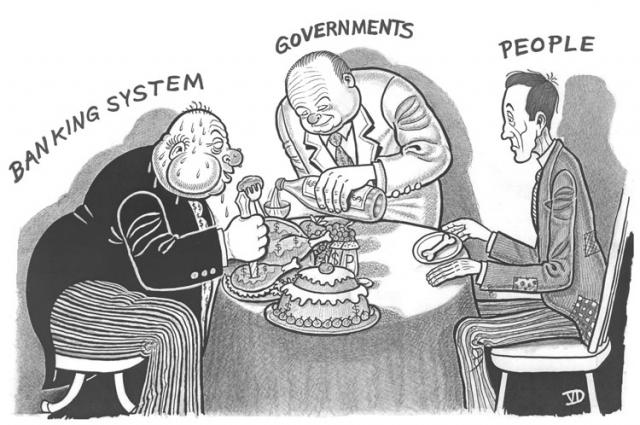
The Budget's immediate answer includes a £100 Household Energy Payment from January 2027 for eligible households in England in council tax bands A-D, within a £2.6 billion package including funding for devolved governments. The electricity VAT cut is extended to July 2027. Such relief meets part of an immediate cost, while leaving households exposed to further price rises. The bank surcharge increase helping to fund it is itself limited to fifteen months. Temporary assistance leaves the longer-term pressure on household incomes intact.
Workers' wages represent a claim on the wealth society produces. Household borrowing maintains purchasing power today by committing future income to repayments and interest. Credit helps sustain the sale of commodities while extending lenders' claims over the wages with which workers must meet their needs. Working people continue to produce wealth, but an increasing part of their pay can already be committed to creditors before it is even received.
The household figures also combine people in opposing positions: workers paying rent and interest, and wealthy owners receiving income from property and financial assets. The same payment which reduces a worker's means of life provides revenue for an owner or creditor. The average conceals the relations through which ownership enables some to claim wealth produced by others.
For example, the OBR projects the average interest rate paid on outstanding mortgages rising from around 4% in 2026 to 5% in 2031, while mortgage debt relative to household income remains broadly stable. Higher interest charges would absorb more income even without an increase in that relative debt burden. More must be paid to lenders for access to the same housing.
The Budget commits £4.7 billion to the Your First Home equity-loan scheme, offering qualifying first-time buyers government loans of up to 20% of a home's value, with an initial five-year interest-free period. This eases the initial cost of buying, but the public assistance brings households into an arrangement in which access to a home depends on their ability to sustain a mortgage and meet the equity loan's eventual repayment terms. Public finance helps people enter the property market while leaving them dependent on creditors and exposed to future housing costs.
The Budget also allocates an additional £1.5 billion for around 10,000 social and affordable homes, prioritising Social Rent. Housing provision can therefore be organised through public funding and rents which do not require each household to finance a private purchase. The economic question concerns which relation is developed to meet the need for homes. Treating housing as a social responsibility requires public capacity to build, maintain and provide it according to need. Leaving households dependent on the property market makes their access conditional on sustaining the financial claims of lenders and owners. An allocation for social housing within that direction leaves this wider dependence in place.
What public investment is made to serve
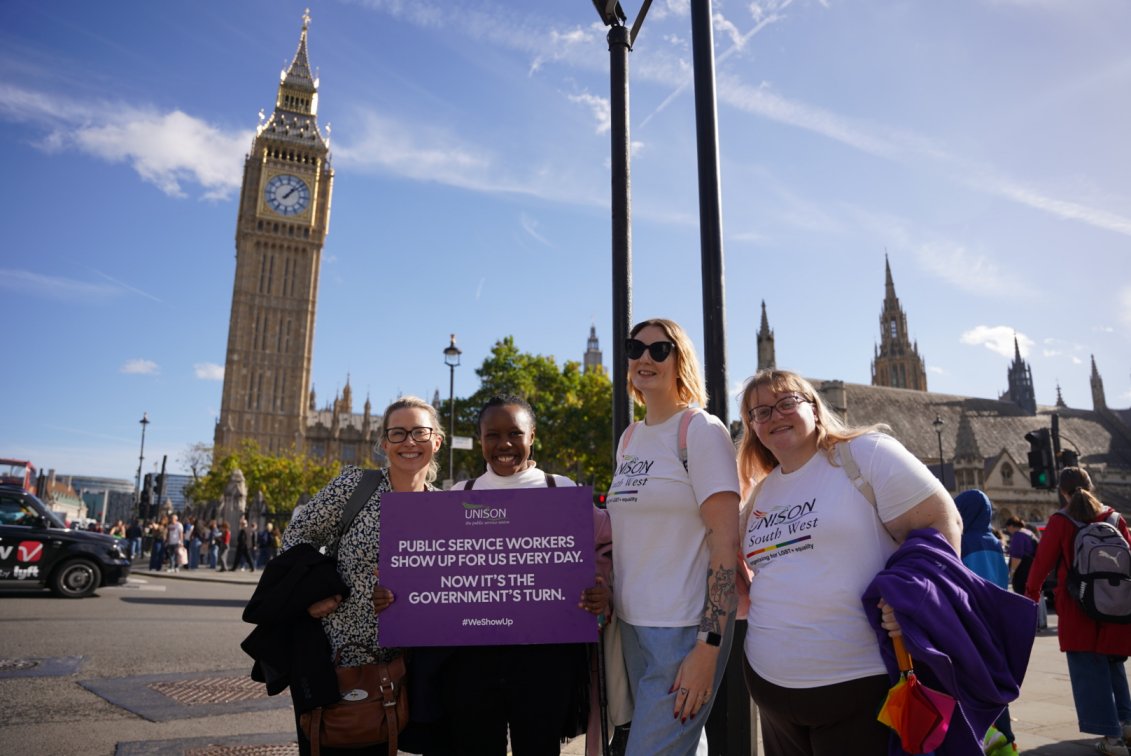
Cost of living pre-budget lobby on Parliament, October 13
2026
The Budget provides an additional £15.4 billion of capital for the National Wealth Fund. It also commits the Fund and the British Business Bank to deploy up to £5 billion over four years into military production, technologies with both civilian and military uses, and other activities serving the government's national-security priorities. The latter commitment overlaps wider financing programmes.
Public loans, equity stakes and guarantees are used to attract private investment. Society supplies finance and assumes risks so that projects can satisfy the returns private investors require. Production may expand while private control over its direction and results is strengthened. The need for housing, energy or infrastructure must first become an opportunity acceptable to those owners.
The government promises in the Budget to back "a new wave of wealth creators". Its new Founders' Relief gives qualifying founders of high-growth, innovative companies a 10% capital-gains tax rate on up to £10 million of lifetime gains from April 2027. The owner realising a private gain receives a preferential claim on the proceeds. Those whose work produces the value receive no corresponding authority over its use. This identifies whom the government's conception of wealth creation is intended to encourage.
The priority given to militarisation of the economy further reveals the aim. The Budget supplies £3 billion towards the remaining cost of the Defence Investment Plan by further reducing departmental capital budgets, alongside £1.7 billion from the Treasury's capital Reserve. Buildings, equipment and infrastructure serving other purposes come under pressure to secure military spending. The government describes this as reprioritisation and warns that some departments may receive no inflation-adjusted increase at the next spending review. Military expansion is secured while other provision is required to adapt to the resources left available.
By contributing to GDP, arms production can be presented as growth while directing skills and resources towards preparations for destruction. An increase in output gives no assurance that society's capacity to provide for itself has improved. The aim of production and the use of its results determine the social content of that growth.
Securing the reproduction of society
The treatment of social programmes exposes the same inverted conception of wealth. Health care, education and other services produce and sustain the human capacities on which the entire economy depends. The value embodied in the capacity to work is reproduced through living labour. Enterprises employing workers benefit from the education, health care and social provision which develops that capacity.
Yet responsibility for financing its production, which is treated as a cost, is shifted onto public budgets and workers themselves. Institutions producing this social value must appeal for allocations and fit their requirements within fiscal limits. The Budget makes this discipline explicit in its stability rule: day-to-day expenditure must be covered by revenues by the third year of the forecast. The financing of services is made dependent on meeting that accounting condition, irrespective of the social value they produce and the needs they must fulfil. Private owners are presented as wealth creators requiring encouragement, while services developing society's human productive force are treated as costs to be restrained.
The result is a direction capable of sustaining financial claims while undermining the conditions of future production. Deteriorating health, inadequate education, insecure housing and worn-out infrastructure impair society's ability to reproduce and develop its capacities. Their repair requires labour, materials, training and investment. Delaying it to satisfy financial targets compounds the damage.
The pension proposals show how one social claim is made to finance another. From 2030, the government will adjust the State Pension Triple Lock, linking the change to its proposed National Care Service in England. It estimates pension expenditure will be £15 billion a year lower by the late 2030s than it would otherwise have been. This is a projected reduction against the existing pension arrangements, not an immediate cash cut. The promise of care is tied to restraining pensioners' future incomes, placing the requirements of older people in competition within the government's financial limits.
The government's fiscal "headroom" measures the gap between a forecast and a chosen financial rule. It measures neither these productive requirements nor society's potential to meet them. A new direction must secure the reproduction of society at the source of its wealth. Enterprises must meet direct obligations towards the social value they use. Public enterprise must provide productive capacity and public income. Investment and credit must be directed towards social requirements, and the wealth produced used to sustain and expand that provision. Technical advances could then reduce necessary labour and improve living conditions instead of enlarging private fortunes alongside insecurity.
The working class must set this direction. Its claims to wages, pensions and social programmes express the requirements of the people whose work sustains society. Their fulfilment must govern economic decisions. The security of society depends on developing its human and material capacities and ending their subordination to paying the rich and preparing for war.
Notes
1. "Autumn Budget 2026: The Working Class Must Set the Direction of the
Economy", Workers' Weekly, October 31, 2026.
https://www.rcpbml.org.uk/wwie-26/ww26-32/ww26-32-01.htm
2. Budget 2026, HM Treasury, October 28, 2026, especially the sections on
fiscal rules, household support, housing, investment, taxation and long-term
fiscal sustainability.
https://www.gov.uk/government/publications/budget-2026-document/budget-2026-html
3. Labour's budget doesn't add up, Richard Murphy, October 30, 2026.
https://www.taxresearch.org.uk/Blog/2026/10/30/labours-budget-doesnt-add-up/
4. Economic and fiscal outlook, Office for Budget Responsibility, October 2026,
paragraphs 2.30-2.32 and 2.58-2.59; Chart 2.16.
https://obr.uk/efo/economic-and-fiscal-outlook-october-2026/
Kathleen Chandler, TML, November 4, 2026
North Carolina students march to vote
The significance of the US mid-term elections held on November 3 is that no amount of intimidation, harassment or punishment on the part of the Trump administration succeeded in preventing the peoples of the US, especially the youth, from making sure Trump's loyalists and henchmen would not be elected. Both Houses of Congress, the House of Representatives and the Senate, went over to the Democrats. What happens next is yet to be revealed. The size of the US debt and the extent of the crisis on every front are not within the control of the Democrats any more than they are under the control of Trump.
Despite Trump being called a lame duck because he has lost control of both Houses of Congress, he has already threatened to veto any legislation Congress attempts to pass that does not accord with the aims of the oligopolies he serves. He said he would rule through expanded police powers. A White House official on Election Day emphasised that these powers will be directed against the peoples' resistance, saying "Regardless of how today plays out, President Trump's resolve to stop the Radical Left is only going to become stronger."
But the resounding No Means No! of the peoples of the US, especially the youth and women, is a story of its own. It is not beholden to any narrow private interest. It rejects the use of violence, brutal repression to terrorise communities and long jail sentences of 30-50 years simply for protesting.
Across the country, efforts to block students from voting, closing of polling stations and long lines did not prevent the youth from achieving their goals. In state after state, the people ousted those responsible for implementing the Trump agenda of criminal attacks on the rights of the peoples at home and abroad.
North Carolina students march to vote
Anger with the genocide in Palestine, the war against Iran and the prohibitive cost of living contributed to the people's No! Youth and women played a key role in the rejection of raids by Immigration and Customs Enforcement (ICE). They succeeded in getting pro-Palestine, anti-ICE candidates on the ballot and elected despite huge difficulties and record levels of spending to demonise these candidates.
They also got people who support LGBTQ2s+ rights elected. This includes the first openly gay man elected to the Senate in New Hampshire while people in Delaware returned their transgender Congresswoman to the US Congress. In Georgia voters sent the first out transgender and non-binary lawmaker to the state assembly. Several other gay candidates also won.
The effort of the presidency to divide people by targeting Black, Latine and Indigenous Peoples also failed, as women, youth and workers stood together to elect new people. In the former slave state of Georgia, the first Black woman was elected governor. An Indigenous woman was elected governor in New Mexico. In Texas, the state's first Latina governor was elected. In Tennessee and Ohio women were elected governor for the first time. Across the country, people in 17 states elected a female governor, setting a new record. This shows the drive of the people to defend the rights of all and use elections to bring forward more women and national minorities.
This drive for change was also evident in Kansas, where a Democratic Senator was elected for the first time since 1932, 94 years ago. In South Carolina, the Republican was ousted in the Senate race, the first time since 1998, with another woman elected.
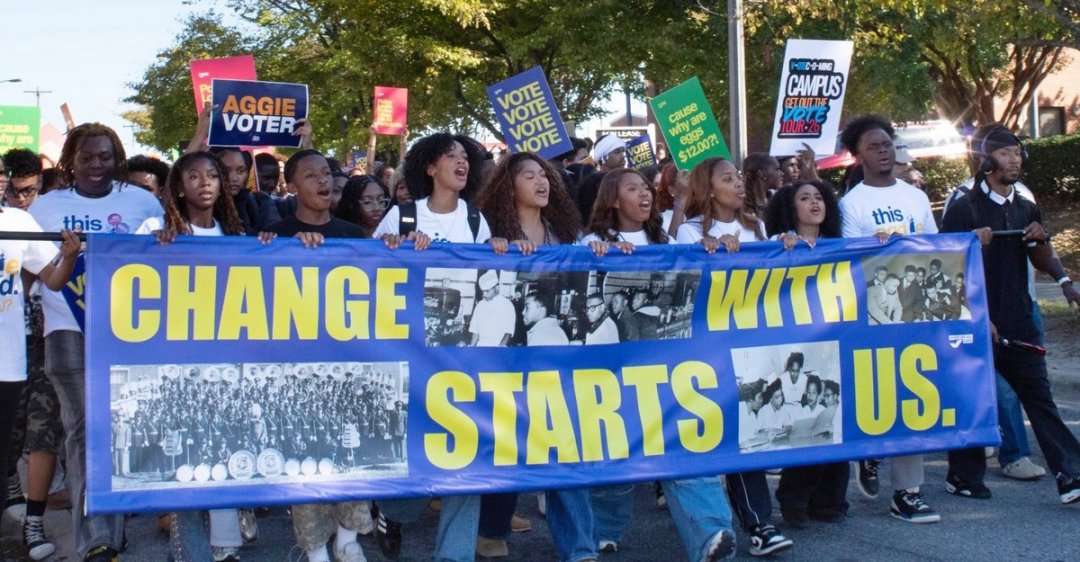
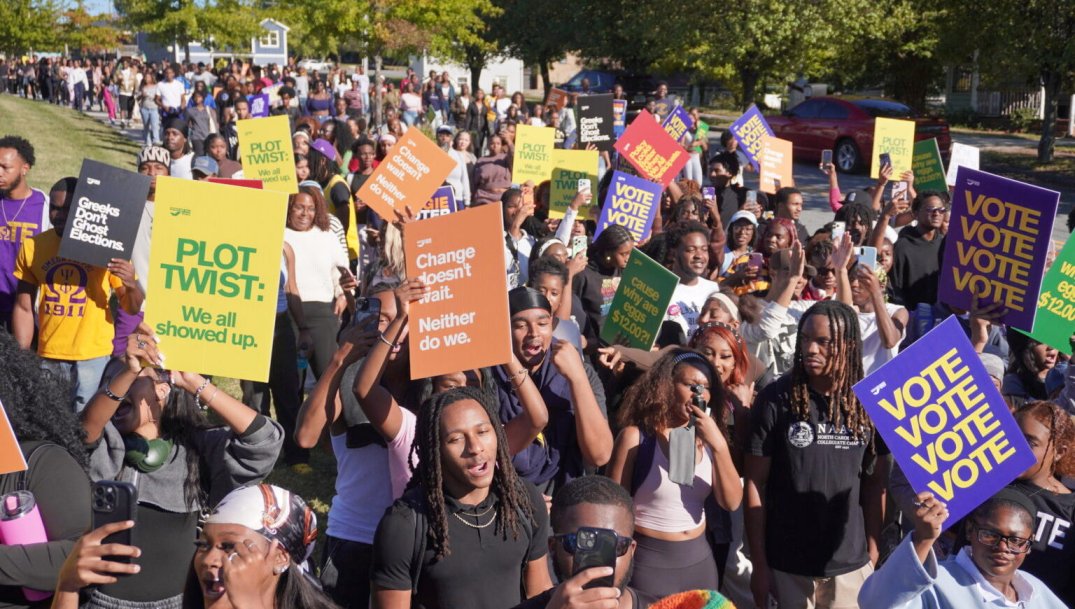
Despite efforts to block the vote of the twenty million college students eligible to vote, many students organised by joining the more than 61,559,450 mail-in and early in-person votes cast nationally, itself an expression of people's striving for empowerment. Students at North Carolina Agricultural and Technical State University demanded an on-campus early voting location. When refused by election officials, 300 walked 45 minutes in the heat to the nearest site. Their march to the polls went viral and inspired many more students to join the fight.
Three in four higher education institutions do not have any in-person voting options on campus, but this did not stop the youth. In Texas, North Carolina and Ohio, election officials slashed the few existing voting sites at campuses serving large numbers of Black and Latine students, an effort that only further fuelled the determination of the youth to thwart such attempts to disenfranchise them. They defeated attempts in Tarrant County, Texas, to eliminate them by eliminating 92 approved polling locations, including that for the University of Texas, Arlington, with 43,000 students, about two-thirds of them Black and Latine. They took the initiative into their own hands and found ways to vote.

Texas, known to vote Republican for decades, is an important example of the determination of the people to reject all Trump stands for. All the Trump loyalists were ousted. These people have played a role in supporting the president's occupation of the state with thousands of troops and National Guard, attacks by ICE and horrific detention centres - all vigorously opposed by the people, especially in border towns like El Paso. Across the state, people said No! They got new people elected to the power positions in Texas - Senator, Governor, Lieutenant Governor and Attorney General - a clean sweep! Despite and because of the manipulation of polling stations, stringent registration requirements and the record hundreds of millions of dollars spent to block their drive to oust the forces of war and repression, they prevailed! This is the first time since 1991 the Governor of Texas is a Democrat and the first time since 1998 that a Senator is.
All of these changes are significant achievements for the peoples of the US.
The peoples across Canada and Quebec have also played their part in this massive expression of No Means No! They have stood steadfast in their refusal to vacation in the US or buy US products in the face of the bullying and threats of the US president.
Work is already underway to advance organised resistance to war and genocide abroad and ICE raids and repression at home. This includes demanding that Congress play its role to stop funding war and fund the claims of the people on society that are theirs by right as the producers of the wealth the society depends on for its living.
Rights organisations, unions and churches defended those who went to vote, while election officials representing states took a stand despite threats, subpoenas, lawsuits and other intimidation. This included unions defending election workers and demands to top state officials to defend people. The governor in California and officials in New York, for the first time, said they would arrest ICE agents if they came to the polling stations. Demands for arrests of ICE agents involved in killings and shootings and to Abolish ICE remain central to resistance.
The Democrats now have majorities in both the House of Representatives and the Senate, but the presidential prerogative powers are not under their control. The significance of the elections nonetheless lies in the confidence that the resistance of the peoples against war, genocide, use of extreme violence, impoverishment, environmental destruction and government refusal to protect people against climate disasters will not let up. The workers, women and youth of the US from coast to coast are remaining steadfast in their self-reliance, knowing from repeated experience that their struggle for rights is decisive.
(Kathleen Chandler is the leader of the US Marxist-Leninist Organisation)
Newsletter of the Stop the War Coalition, November 6

The international anti-war movement is growing. People across the world are beginning to connect their crumbling standards of living with wars and militarism and are increasingly joining the dots between oppression at home and war overseas.
War and its domestic impact cost Trump the midterm elections. Palestine was also on the ballot, hence Trump's announcement over military aid to Israel moments before the polls opened.
The mass protests across Europe, whether initially sparked by dilapidated schools or a housing crisis, are drawing links between rearmament and austerity. Anti-war placards and Palestine flags are everywhere. The international youth and student day of action called at the London anti-war conference in June is looking to be huge across the continent.
International Youth Strike against War

On November 20, thousands of students across the UK and internationally will walk out of their schools, colleges and universities against the drive to war, the militarisation of education and the austerity that comes with it.
Here the education unions are supporting the student action. The UCU has called a day of action to coincide with the students and the NEU is backing the protests.
From Brighton to Edinburgh students are saying no to war and militarism. In London there will be a rally in Trafalgar Square where students from across the capital will come together at 1pm following uni and college walk-outs.
International Day of Action against War

On the following day, Saturday, November 21, there will be protests in towns and cities across the country. Similar protests are expected to take place around Europe.
Andy Burnham may have called for de-escalation in the Middle East but he is still sending fighter jets to Saudi Arabia to aid in the assault on Yemen and giving his full support to the war in Ukraine.
In London there will be a protest outside Downing Street at midday. A peace conference is being held in Preston. In Manchester, StW is supporting the Lucas Plan 50 years anniversary conference. Other protests and actions are taking place in Liverpool, Brighton, Bristol, Cardiff, Newcastle, Birmingham, Glasgow.
Receive Workers'
Weekly E-mail Edition: It is free to
subscribe to the e-mail edition
We encourage all those who support the work of RCPB(ML) to also support it
financially:
Donate to
RCPB(ML)
Workers' Weekly is the weekly on
line newspaper of the
Revolutionary Communist Party of Britain (Marxist-Leninist)
Website:
http://www.rcpbml.org.uk
E-mail:
office@rcpbml.org.uk
170, Wandsworth Road, London, SW8 2LA.
Phone: 020 7627 0599:
